
UN Organisations appeal for funds to protect 8.8 million people from El Niño
On 18 June 2026 the World Food Programme (WFP) and the Food and Agriculture Organization (FAO) issued a Joint Anticipatory Action Appeal for funds to avert the anticipated crisis expected due to currently developing El Niño conditions. El Niño will threaten food security, agriculture and livelihoods across multiple regions over the next two years.
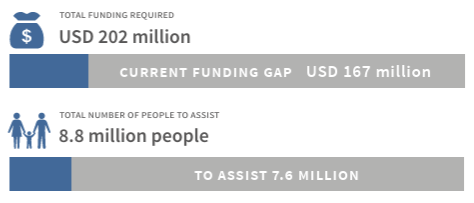
The two agencies currently have $35 million which is enough to help 1.2 million people, shown in blue in this diagram. But they expect a further 7.6 million people will their help, and they will need another $167m to supply them with drought-resistant seeds, flood defences, water storage systems and cash transfers.
The joint Appeal marks a shift from reacting to crises to financing action before they happen on unprecedented scale. Research shows that every $1 spent in anticipatory action saves $7 in humanitarian relief costs. The Appeal draws on the complementary strengths of both agencies and interventions proven to mitigate the humanitarian impact of climate shocks through anticipatory action before they drive millions more into hunger and destitution.
But where is the money going to come from? This is a difficult time to raise money for international aid projects such as this.
In January 2025, shortly after taking office for his second term, President Donald Trump ordered a near-total freeze on all foreign aid previously delivered by United States Agency for International Development (USAID) which had an average annual budget of $23 billion.
In 2025 the UK Government announced that UK aid spending will be “gradually reduced” from 0.5% of gross national income (GNI) to 0.3% of GNI in 2027. This required about £6 billion to be cut from the overseas budget by 2027 in order to fund an increase in defence spending.