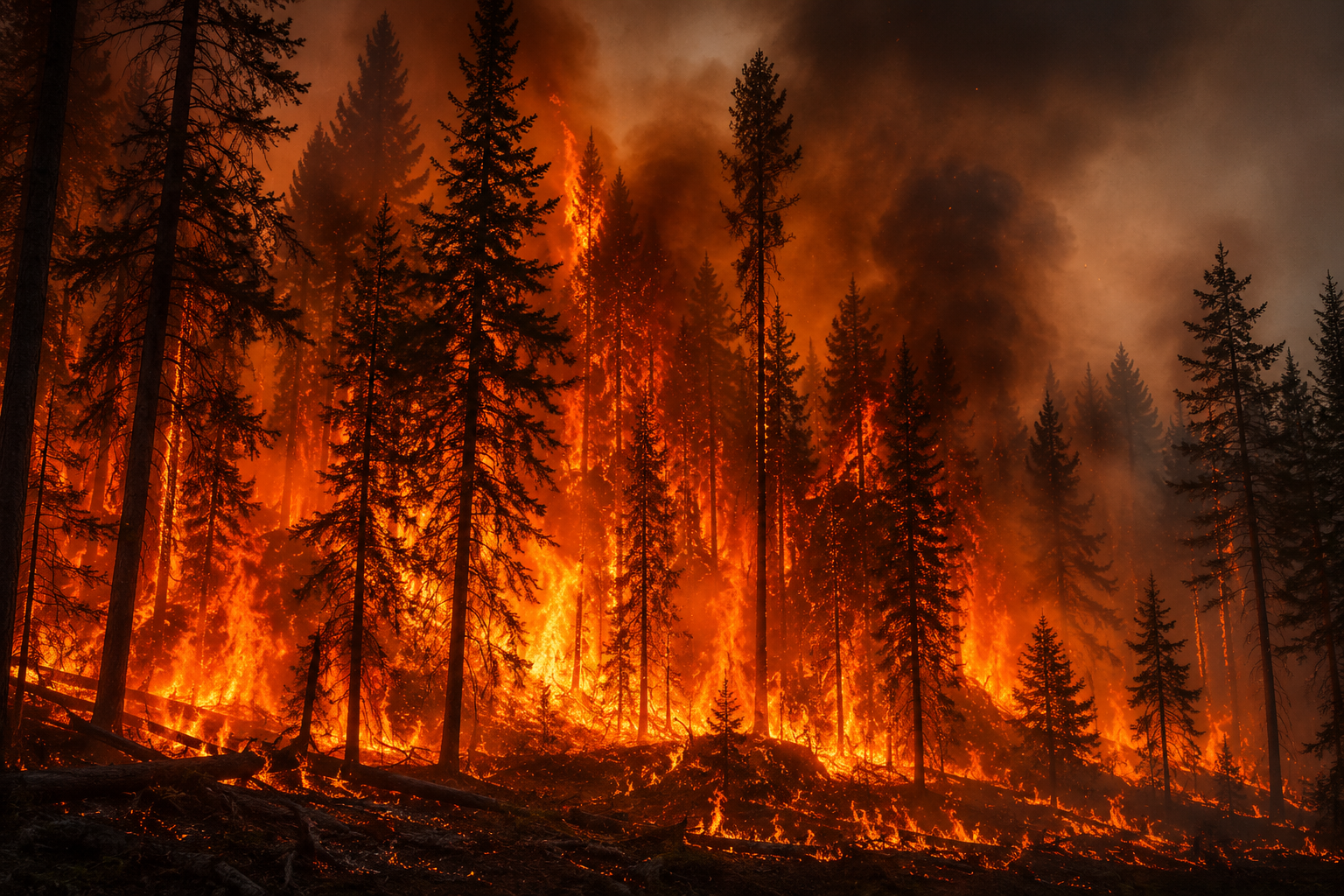
You call this a heatwave? You ain’t felt nothing yet!
What is a heatwave?
The UK Met Office has a complicated definition of a heatwave which says there must be three or more days where the maximum temperature is at or above a certain level which varies from 25°C to 28°C in different parts of the UK. But since they forecast temperatures of 30°C, 32°C and 33°C during the three days of the spring bank holiday weekend, there will probably be a heatwave over huge parts of the country.
But in reality these temperatures are nothing compared to what is coming towards us over the horizon and threatening our very way of life.
A few days before the bank holiday weekend, the UK Climate Change Committee (CCC) published its Independent Assessment of UK Climate Risk 2026. Here are some extracts from its assessment:
The Present
It said there has been little progress on preparing ourselves for the changing climate. We are already experiencing disruption and damage from the rapidly increasing risks from climate change in the UK today. These risks are not only eroding our cliffs, but also the fundamentals of our health system, our insurance sector, and our children’s schooling.
What governments have been doing on adaptation clearly isn’t working. It is time for change.
The Future
Climate change is undermining the UK’s security and prosperity. We are already experiencing serious impacts now, and further impacts are inevitable. By the middle of the century, the UK’s climate will be much more extreme than today. Hotter heatwaves could see 92% of existing homes overheat, creating dangerous conditions for vulnerable people.
Peak river flows will be up to 45% higher, last longer, and be seen more frequently, driving increased flooding. Drier summers will mean shortfalls in water supply could reach over five billion litres per day, making drought more widespread. Without global emissions reductions, these risks may go past the point where the UK can protect itself with adaptation measures.
The UK was built for a climate that no longer exists today and will be increasingly distant in years to come. While efforts to keep global warming well below 2°C above preindustrial levels must remain a priority, the world is not yet on track for this.
What can the UK do?
At a minimum, the UK should prepare for the weather extremes that will be experienced if global warming levels reach 2°C above preindustrial levels by 2050. At the high end of possibilities, reaching 4°C above preindustrial levels by the end of the century cannot yet be ruled out. This should be considered as part of effective adaptation planning.
The CCC estimates that investment of around £11 billion per year (range £7–£22 billion, 2025 prices) is needed from the public and private sectors. This will generate returns in the tens of billions. Whilst limits in data and methods mean both the investment and the returns are likely to be underestimated, investment of this order is manageable in an economy that currently invests around 50 times as much. Investment requirements are likely to be split in roughly equal proportions from the private and public sectors.
What can you and I do?
UNA Coventry runs a website called Coventry Climate Action Network aimed to motivate organisations, individuals and community groups in Coventry and the surrounding area to share ideas and learn what we can do to combat global warming. Each one of us can do simple things to help reduce our carbon and other greenhouse gas emissions and so mitigate their effect on the climate. You will find some suggestions here.