
Aid workers in Gaza fainting from hunger and exhaustion
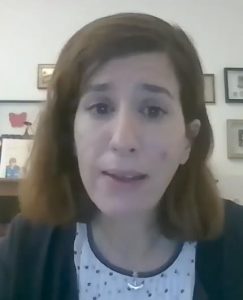 On 22 July 2025 Juliette Touma, the Director of Communications with United Nations Relief and Works Agency for Palestine Refugees in the Near East (UNRWA), issued the following statement on behalf of UNRWA Commissioner-General, Philippe Lazzarini.
I’m going to give the latest from the Commissioner-General who’s asked me to convey a statement, including on our staff in Gaza. I’ll say also a couple of words on the situation of visas for UNRWA staff. And I’ll also conclude with the latest on the humanitarian situation, the needs and the calls for access, and then look forward to your questions.
The Commissioner General issued a statement to raise the alarm on the dire situation of caretakers and humanitarian workers in Gaza, including UNRWA staff. This is following dozens of SOS messages that we’ve been receiving from UNRWA staff who are living across the Gaza Strip over the past 48, 72 hours.
Gaza has become hell on earth and no place is safe. In his statement, the Commissioner-General said that no one is spared. Caretakers, including UNRWA colleagues in Gaza, are also in need of care now.
Doctors, nurses, journalists, humanitarians, among them UNRWA staff, are hungry. Many are now fainting due to hunger and exhaustion while performing their duties, reporting atrocities or alleviating some of the suffering.
Meanwhile, seeking food has become as deadly as the bombardments. More than a thousand starving people have been reported killed since the end of May. The so-called DHF distribution schemes is a sadistic death trap. Snipers open fire randomly on crowds as if they’re given a license to kill. It’s a massive hunt of people in total impunity.
Commissioner-General adds, this cannot be our new norm. Humanitarian assistance is not the job of mercenaries. The UN and its humanitarian partners have the expertise, the experience, and available resources to provide safe, dignified, and at-scale assistance. We have proven it time and again during the last ceasefire. He finally called for an end to this abomination.
That was the statement from the Commissioner-General, which I can put in the chat box. And then on visa, just a couple of words. We’ve learned this week that the visa renewal of the head of OSHA in the OPT was denied by the Israeli authorities.
We wanted to put things in perspective in case it’s helpful for you reporting while this is the latest of such decisions from the Israeli authorities is certainly not the first.
We’ve noticed at UNRWA a pattern of visa restrictions and denials, preventing our staff members from doing their work. We at UNRWA have been in particular affected. If we go back to March 2024, the UNRWA Commissioner General was denied entry to Gaza by Israeli authorities. He has not been let back into Gaza since March 2024.
In addition to that, his visa to Israel, which would normally allow him to visit the occupied West Bank, including East Jerusalem, has not been renewed for over a year now, since June 2024.
And for UNRWA international staff in general, since January this year, it’s been almost six months for us now, we have not received any visas from the Israeli authorities for international staff, which means at the moment UNRWA does not have any international staff across the occupied Palestinian territory. This has been the case for more than six months now.
We have our local Palestinian staff who continue to hold the forts in the Gaza Strip and the West Bank. They’re doing a stellar job under very, very difficult circumstances. We do hope that we would be granted visas to go and support our Palestinian staff in the humanitarian mission that they’re undertaking.
And a couple of words on living conditions and the impact of lack of basic supplies, a little bit away from food and the risk of famine that continue to be looming in Gaza. We received stories from people in Gaza about diapers, diapers for babies.
Given that there is no diapers or there is very very little around and they’re very very expensive. What is available on the market it costs at least three dollars per diaper and many many people cannot afford it.
So UNRWA staff have been speaking to mothers in particular and they’re telling us that they’re resorting to desperate measures to replace diapers for babies and children. This is very similar to the story I shared with you earlier this year when we interviewed a father who said that he had to cut one of his last shirts to give his daughter sanitary pads. So now it is similar with diapers. Mothers are using plastic bags instead of diapers. We remind that we have, we at UNRWA, we have stocks of hygiene supplies, including diapers for babies and for adults waiting outside the gates of Gaza, just to get into Gaza and help babies and older people.
We have 6,000 trucks that continue since the last time we’ve updated you on the situation. We continue to have 6,000 trucks that are in Jordan, that are in Egypt, waiting for the green light to go in. They are loaded with food, with medicines, with hygiene supplies, including sanitary pads and diapers. And we call again for a deal that would bring a ceasefire, that would release the hostages, that would bring in a standard flow of humanitarian supplies into Gaza under the management of the United Nations, including UNRWA.