
Jane Kinninmont addresses London International MUN 2026
Recording kindly provided by UNA Coventry volunteer Danila Mikheev, student of BSc Management at the University of Warwick.
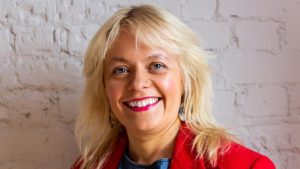 On Sunday 22 February 2026 the Chief Executive Officer at the United Nations Association UK, Jane Kinninmont, delivered this speech at the closing ceremony of the London International Model United Nations University Conference (LIMUN UC) 2026. LIMUN is one of Europe’s largest and longest-running Model United Nations conferences, held annually in London.
I have heard it with very good authority that many of you have had less than four hours sleep. And I’m glad to hear that as well as late nights of diplomacy, there was also a late night of dancing because these things are very important to keeping us all sane.
And well done to all of you for using a weekend to put yourself in someone else’s shoes and to use the most human of tools, your imagination and your empathy, to think about diplomacy, negotiation, compromise and how people can come together from different positions, different backgrounds and different nations and work out some kind of common interest.
The MUN is a fantastic opportunity as well to learn about the UN procedures and processes, but as you know, the United Nations of the future may look very different. Indeed, it’s possible that it may not exist at all. The UN is facing so many challenges today that there is no shortage of people willing to write its obituary. It is challenged by a multiplicity of planetary crises.
It’s challenged by being fundamentally an organisation that is built around a system of nation states in a world where increasingly people don’t trust those nation states or their governments and where nation states’ power is being challenged by a whole host of non-state actors.
And the UN is challenged by the need to structurally adapt to a more multipolar world. You heard on Friday, as you gathered in Central Hall, Westminster, about how 51 countries came together there in January 1946 for the first meeting of the UN General Assembly. And now, of course, that General Assembly includes 193 countries. Most of those countries were not there, were not independent states and were not involved when the charter was written. So there’s a lot of adapting to do.
But none of these challenges are a reason to tear up the UN, to throw it away, or to think that unilateralism could possibly bring us something better than multilateralism. Perhaps especially in a multipolar world, it should be obvious that unilateralism at the end of the day simply increases the risk of great power war, because quite a few countries will think that their unilateralism is best.
And the multiplicity of planetary challenges that we face, from climate change to the need to figure out between us how to harness AI for good, these mean that the UN has more on its to-do list, but they also show the necessity of international cooperation today.
Many countries are tempted to go off into more local groups, Europeans for Europe and so on, or to go off in like-minded groups and working with the like-minded is very useful. Probably you’ve found that in some of your sessions, that sometimes having a huddle with people you agree with is a helpful part of the process.
But we don’t live in a world full of like-minded countries. And we need the big, inclusive, albeit messy system of the UN to bring us together so that from different points of view, we still have a common system that does bring countries together.
The UN needs to adapt. It needs to be refreshed. generated. And for that reason, even more than usual, the UN needs you. It needs young talent. It needs people who want to work for it. And it needs people that will take the principles forward.
I know quite a few of you will be interested in careers as diplomats or careers in the UN system. But think more broadly too. Maybe some of you will work in AI. Maybe some of you will work in banking. Maybe some of you will work in consumer goods.
The world will be a better place if the people who are the next generation leading the private sector believe in multilateralism, believe in sustainability, believe in fairness and transparency and sustainable development.
You can make a difference no matter what your career or your walk of life. You can find a way to bring those principles into what you do and to change your organization your community and the people around you for the better.
I will wrap up in a moment to give you time to savour the awards and celebrate what you’ve all done. But I just wanted to thank each and every one of you for being here today. You are a source of hope for the future of the international system. I hope you’ll find ways to stay engaged beyond this weekend.
Please, if you are based in the UK, do get involved with us at the United Nations Association of the UK. We’ll be spending a lot of time in the next few months talking about the future leadership that the UN needs, and in particular, the type of leadership the UN will need from its next Secretary General, doing one of the hardest jobs in the world and going through one of the hardest interview processes in the world. Because their job will depend on getting the approval of Putin, Trump and Xi, as well as Keir Starmer and Emmanuel Macron.
So if you’re worried about the job interviews you may have ahead of you, spare a thought for those poor people going through that process. But that next Secretary General will only have real power If the UN has support of civil society around the world.
If people like you and your peers don’t think it matters and don’t think it’s relevant, then it will be easier for governments to push that voice aside. So for the UN to have its soft power and its moral authority, it’s really popular support that will make that happen.
And I think that as the UN does face the threats it’s facing, they are more and more conscious today that civil society and youth support isn’t just a knife to have, it’s not a favour the UN is doing to the young people. It’s absolutely essential for this system to continue and to thrive.
So thank you for being part of that support. I look forward to seeing what you’re going to do next. Thank you.